
Attending RICTA – 9th Iberian Meeting on Aerosol Science and Technology
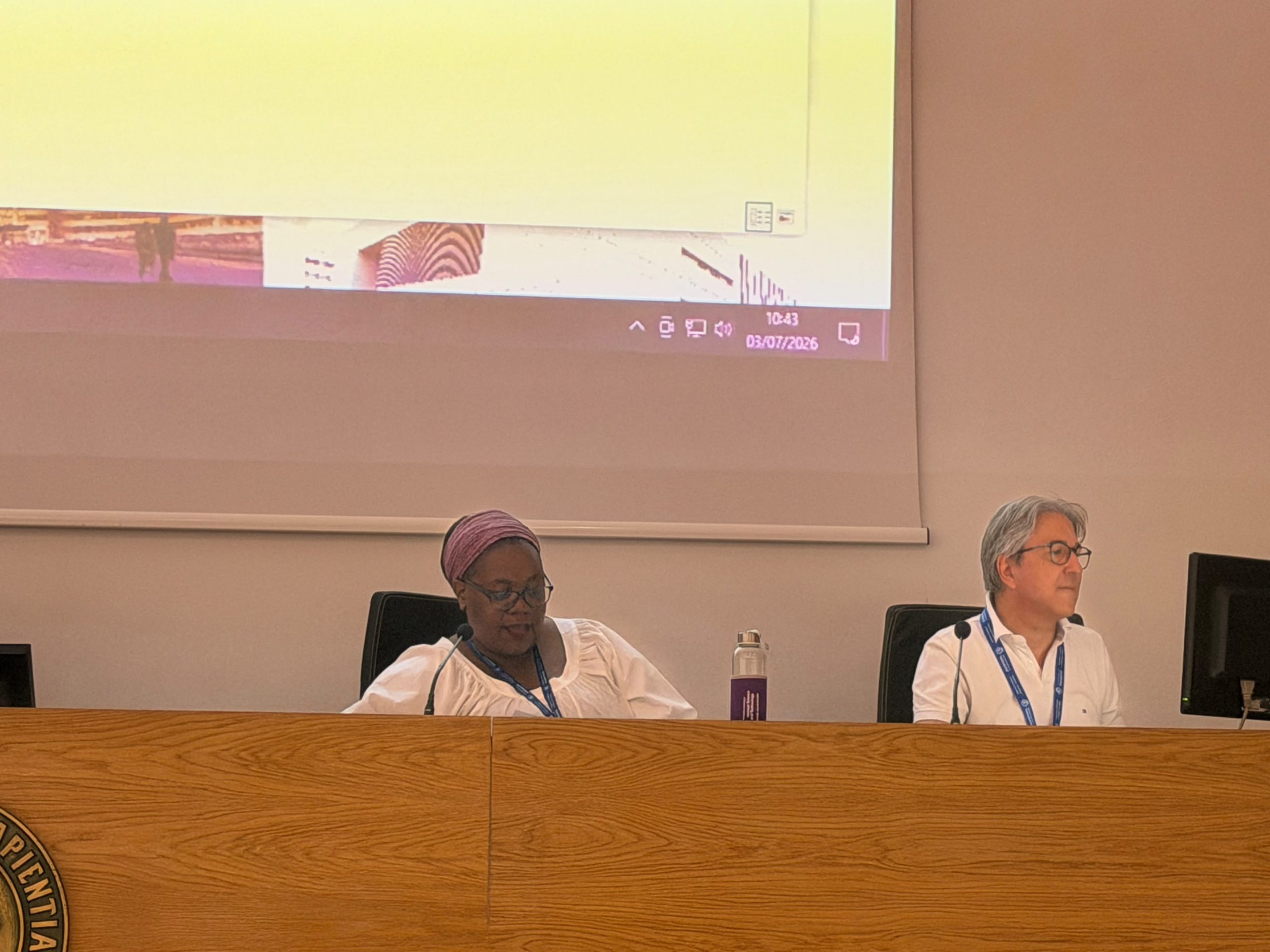
The researcher Netsai Vanessa Sadza, member of the Nubolosyti Project, has attended the 9th Iberian Meeting on Aerosol Science and Technology (RICTA, 2026), that has taken place the July 1st-3rd at the University of Valladolid (Spain). Netsai Vanessa has leaded and presented a Multi-Sensor Assessment of the Cloud-Aerosol Transition Zone using Longwave and Shortwave Surface Irradiances. Yolanda Sola, of the Universitat de Barcelona, and J. Calbó and J.A. González, of the Universitat de Girona, are co-authors of the study. Netsai Vanessa Sadza has also co-chaired the RICTA session devoted to Advanced Remote Sensing of Aerosols and Trace Gases.
New satellite study reveals a widespread transition zone in the sky, challenging climate models
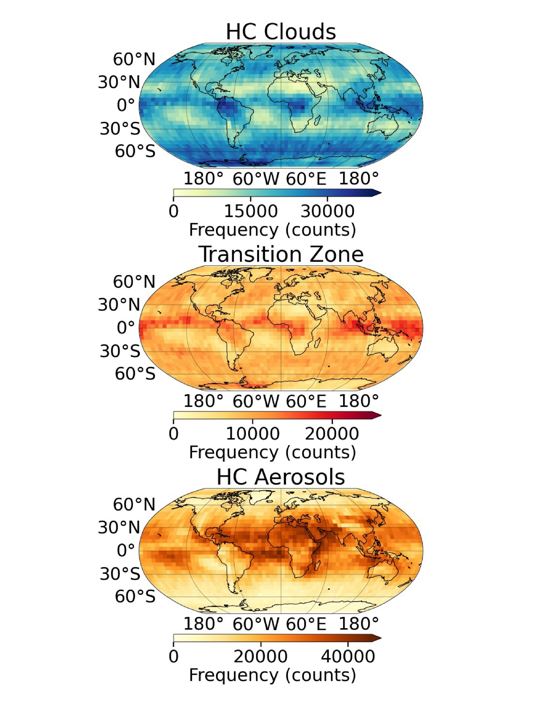
A new study published in Advances in Atmospheric Sciences has shed light on a previously overlooked but common atmospheric phenomenon: the transition zone (TZ) where clouds and aerosols blend together, making it difficult to tell where one ends and the other begins. These conditions in the sky are more prevalent than previously thought and could be a key to reducing uncertainty in future climate projections. Clouds and aerosols (tiny suspended particles in the air) are critical players in regulating Earth's temperature, but they remain one of the largest sources of uncertainty in climate models. Traditionally, scientists have classified atmospheric layers as either [...]
Columnar properties in “El Montsec” during dust outbreaks
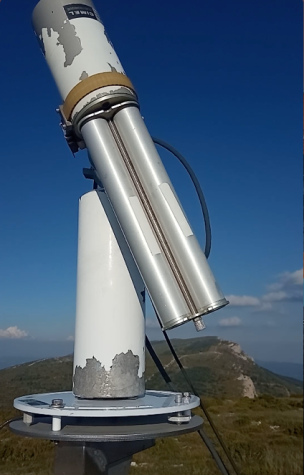
The sun-sky radiometer Cimel CE-318 located at El Montsec station detected the multiple Saharan dust intrusions during February and March. The Cimel instrument belongs to AERONET network, who automatically processed data (level 1.5). Cimel sun-sky radiometer at the regional background station El Montsec The Angström exponent showed values lower than 0.5 during some days, especially from 20th February to 5th March, indicating the dominance of coarse particles. Some of the episodes were also characterized by high AOD. Variation of AOD and Angstrom exponent during February and March 2021 The strongest outbreak was detected on 5th March, [...]
Saharan dust intrusions along February 2021
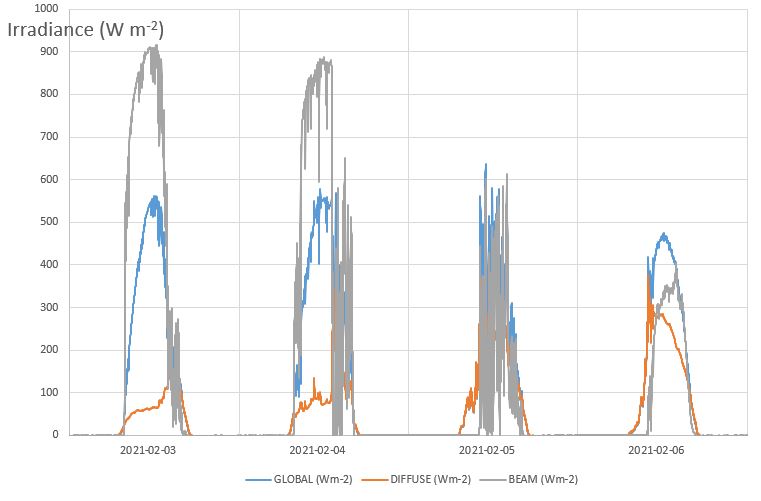
In recent weeks several episodes of intrusion of Saharan dust have affected the Iberian Peninsula and other parts of Europe. We show here how these episodes have been detected by different instruments which are routinely measuring in the stations managed by Nubesol-2 researchers. We can observe, in the movie for February 3rd, the Moon trajectory during the nighttime, and the Sun trajectory during the daytime. Both Moon and Sun show reduced aureole, in correspondence with the low aerosol load in the atmosphere for that period. Contrarily, in the movie showing sky evolution along February 6th, and during the daytime period, [...]
The researcher Netsai Vanessa Sadza, member of the Nubolosyti Project, has attended the 9th Iberian Meeting on [...]
A new study published in Advances in Atmospheric Sciences has shed light on a previously overlooked but common atmospheric [...]
The sun-sky radiometer Cimel CE-318 located at El Montsec station detected the multiple Saharan dust intrusions during [...]
In recent weeks several episodes of intrusion of Saharan dust have affected the Iberian Peninsula and other [...]